Add Row
Add Element
cropper
update
Marin Home Ideas
update
Add Element
  • Home
  • Categories
    • Home Remodeling Ideas
    • Interior Design & Decor Ideas
    • Gardening & Landscaping Ideas
    • Outdoor Living & Entertaining
    • Health & Wellness at Home
    • DIY at Home
    • Kitchen Ideas
    • Bedroom Ideas
    • Bath Ideas
    • Cooking at Home
    • Home Office Ideas
    • Lighting Ideas
    • Furniture Ideas
    • Architecture Ideas
    • Senior Living at Home
    • Home Finance
    • Real Estate News
June 25.2025
3 Minutes Read

Is It Smart to Follow the Five-Year Rule When Selling Your Home?

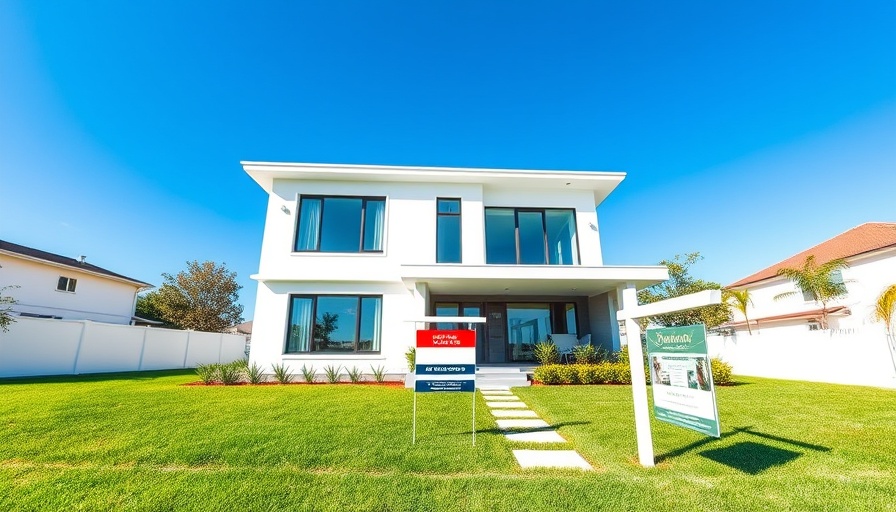
Modern house with real estate sign, question: how long should you live in a house before selling?

Understanding the Home Selling Timeline

When it comes to selling a home, timing can greatly influence the financial outcome for the seller. As a real estate professional, you may be asked, “How long should you live in a house before selling?” While opinions vary, most experts suggest that waiting at least five years before selling is ideal to maximize returns. This timeframe allows homeowners to build equity, which can help offset transaction costs.

Life Events That May Prompt a Sale

Homeowners often consider selling due to personal life changes. You might have clients looking to sell because of a new job that requires relocation, a growing family that needs more space, or empty nesters downsizing in retirement. These significant life events influence their decision to move, often superseding pure financial metrics.

The Five-Year Rule: A Financial Perspective

The five-year rule is a benchmark that many in real estate uphold. By staying in a home for at least this time frame, sellers can increase their property value through appreciation, complete equity buildup, and home improvements. For instance, let’s assume a homeowner purchases a house for $400,000. If they sell after five years and have made strategic upgrades, the value might increase to $480,000, providing an appealing return. Consider also the capital gains tax exemption that applies to homes held for more than two years, providing added financial incentive to remain longer.

Transaction Costs: Hidden Expenses to Consider

Selling a home incurs various transaction costs, including agent fees, closing costs, and potential repair expenses. These can amount to 6-10% of the sale price. By staying longer in their home, sellers improve their chances of covering these fees through increased equity. A real estate professional should ensure clients understand these potential costs when evaluating their overall home sale strategy.

Local Market Conditions Affecting Sales

Understanding local market conditions is crucial. A seller in a hot market may feel pressure to sell sooner, capitalizing on rising prices; however, it's still important to consider that the housing market can fluctuate significantly over just a few months. Utilizing data from reliable platforms like Zillow, Redfin, or local MLS listings will help provide adequate information for clients preparing to sell.

Calculating Home Equity: What Are Your Clients Leaving Behind?

Home equity plays a significant role in how long homeowners should remain in their property. Homeowners can increase equity through appreciation, improvements, or the amortization process. By selling too early, homeowners might leave money on the table that they would otherwise benefit from investing in a future property or utilizing for other financial goals.

Strategies for Early Sellers: Exploring Alternatives

For clients who are in urgent need to sell, consider discussing options like renting the property out instead of selling or employing a real estate investment strategy. This route could provide working capital while still maintaining ownership over time, or they may consider using a real estate agent for an accurate market appraisal before making their decision.

Final Thoughts: Making an Informed Decision

Deciding when to sell a home is a complex mix of financial insight and personal circumstance. As a real estate professional, guiding your clients through their options will empower them to make informed decisions that align with their unique needs and situations. Ultimately, patience can translate into better returns in the complex and often unpredictable real estate market.

By considering these insights and thorough market analysis, your clients will navigate the property sale landscape with confidence and assurance that they’re making the best decisions for their future.

Real Estate News

7 Views

0 Comments

Write A Comment

*
*
Related Posts All Posts
11.13.2025

Explore the Easiest NFL Stadiums to Reach Without a Car – A Real Estate Perspective

Update Redefining Game Days: Car-Free Access to NFL Stadiums As millions of fans across the U.S. gear up for another NFL season, many are left grappling with the challenge of getting to their favorite stadiums. The game day experience often begins with long drives, packed parking lots, and congested exits that stretch the excitement of kickoff to the limits. However, as urban planning evolves, some cities are reimagining how to make NFL stadiums not just venues but integral parts of their communities, easily accessible without the need for a car. The Importance of Accessibility Redfin's recent study revealed that cities are beginning to incorporate mixed-use developments—homes, retail spaces, and public parks—around stadium locations. For example, the Washington Commanders are leading the way with a $3.8 billion plan to establish a new venue at the historically significant RFK Stadium site. This plan not only caters to sports enthusiasts but also enhances local living standards, transforming these areas into vibrant districts that support a car-free lifestyle. Top Stadiums for Car-Free Accessibility The analysis offers insights into which NFL venues are leading the charge in accessibility. Here are some frontrunners: Lumen Field (Seattle Seahawks): This stadium scored 94 overall, with a perfect transit score of 100. Located just south of downtown Seattle, it’s easily accessible via light rail, bus, and bike. U.S. Bank Stadium (Minnesota Vikings): With an overall score of 88, it’s nestled in the heart of Minneapolis, allowing fans easy access through light rail options and protected bike lanes. M&T Bank Stadium (Baltimore Ravens): A score of 82 positions this venue near the bustling Inner Harbor, with direct light rail service enhancing its appeal. Ford Field (Detroit Lions): Rated 72, Ford Field is a centerpiece of Detroit's revival, well connected without the necessity of a car. Soldier Field (Chicago Bears): While its historic significance enhances its charm, a score of 72 illustrates its accessibility via public transport and scenic bike routes. Financial Considerations of Location While these stadiums boast accessibility, they also highlight a range of living costs nearby. For instance, homes near Lumen Field average around $853,750, while Minneapolis homes average $353,250. In contrast, Baltimore offers more budget-friendly options, with homes averaging $221,000 and competitive rent prices. This balance of accessibility and cost is crucial for fans considering where to reside while enjoying the game's atmosphere. Expanding Accessibility Efforts Beyond just transportation, there's a crucial push for these stadiums to increase their overall accessibility, especially for those with special needs. Facilities are increasingly being designed to accommodate individuals with diverse requirements, reflecting a greater understanding of inclusivity. For example, U.S. Bank Stadium has begun to integrate sensory rooms—dedicated spaces that allow fans with sensory sensitivities to enjoy the game experience without being overwhelmed. These features are becoming essential as more voices advocate for inclusive design that goes beyond the baseline legal requirements set by the Americans with Disabilities Act (ADA). Broader Implications for Urban Planning The reimagining of NFL stadiums as public hubs illustrates a shift towards sustainable urban planning. This model aligns with growing public interest in reducing carbon footprints and promoting healthier lifestyles, encouraging transportation options beyond the car. Commercial real estate opportunities also flourish in these environments. Properties situated near transit-friendly stadiums can yield higher rental rates and more stable investments, making them attractive options for real estate agents and investors alike. Investing in a Car-Free Lifestyle For fans and real estate professionals, understanding the intersection of accessibility and property values is vital. Not only does it open new avenues for investment properties, but it shapes future residential developments around NFL venues. As we progress into another NFL season, fans are encouraged to consider the implications of their game day experiences—whether that includes moving closer to a bustling stadium community or seeking rental properties that enhance their football-fan lifestyles. If you're looking to explore homes near these thrilling stadiums or find more properties nearby, consider connecting with a real estate agent who understands the market trends and can help guide you to the best opportunities.

11.13.2025

Discover the Power of Real Estate With Redfin's Conversational Search

Update Revolutionizing Home Searches with Conversational AI The future of home buying has arrived, and it’s much more interactive than simply scrolling through property listings. Tools like Redfin’s new conversational search feature harness the power of language to redefine how buyers interact with real estate websites. More than just a static database, these platforms use AI to allow potential homeowners to engage and refine their search through conversation. Engaging Conversations Yield Personalized Home Results Imagine being able to ask about specific features of a property while chatting with a digital assistant that understands your precise needs. Instead of sifting through endless listings, homebuyers can describe desired characteristics—like location, price range, and must-have amenities—in their own words. For example, a user recently looked for newly remodeled homes near their workplace and received tailored recommendations in under three minutes. This seamless interaction reflects a significant shift from traditional search techniques. From Picky Buyers to Instant Gratification—The Real Estate Market Adjusts As the real estate market continues to evolve, buyers’ expectations are shifting accordingly. With supply constraints and heightened demand, consumers now require a personalized approach that traditional search methods can't provide. Conversational AI bridges this gap, offering a response to the modern housing market’s challenges by quickly matching listings to specific buyer needs. As per recent statistics, nearly 50% of buyers are willing to embrace AI tools for property searches, showcasing the increasing comfort with technology in real estate. How AI Streamlines Home Buying Processes Conversational search not only simplifies the search process but also integrates smoothly with other real estate services. For instance, once users find a property they love, they can easily connect with an agent, schedule a tour, or even get pre-qualified for a mortgage all within the same interface. This cohesive experience, where home search and financing intertwine, presents a significant advantage for both buyers and agents. The Rising Use of Conversational AI in the Industry According to research by iovox, conversational AI enables real estate professionals to engage more effectively with clients. By identifying opportunities through keyword analysis and allowing for lead generation, AI tools help agents understand client needs better and enhance their overall service offerings. Moreover, when AI solutions help manage inquiries round the clock, they enable agents to maintain consistent contact, nurturing leads until they’re ready to make a purchase. Maximizing the Benefits of Redfin’s Conversational Search To get the most out of this technology, users should articulate their requirements clearly. For example, instead of simply asking to see homes in a certain city, buyers should specify parameters like budget, proximity to amenities, and specific features like a pool or modern kitchen. By providing detailed inputs, the AI can deliver more relevant results. Transforming the Real Estate Landscape As the implementation of conversational AI expands, its potential applications are seemingly limitless. Real estate platforms like Redfin, Zillow, and Realtor.com are already leveraging these technologies to facilitate faster, more accurate transactions. As customer expectations and technological capabilities coalesce, the entire real estate industry is on the brink of a transformation that prioritizes personalization and efficiency. With tools such as these becoming ubiquitous, both buyers and agents are set to benefit from an operational shift that’s more intuitive and engaging. Embracing conversational search tools may not only streamline your house-hunting experience but also prepare you for the future of real estate transactions. Take Action Towards Modern Home Buying Today! With conversational search features accessible on Redfin, now is the time to experience this innovative method of browsing real estate listings. Describe not just what you seek but your lifestyle—how far you’re willing to commute, the type of neighborhood you desire, and must-have features. Engage with AI in your next home search and discover listings tailored exactly to your needs. Visit Redfin.com to get started on your journey to finding the perfect home today!

11.13.2025

Unlocking Real Estate Pricing Psychology: Strategies for Seller Success

Update Understanding the Psychology of Home PricingThe psychology of real estate pricing is an intricate blend of human behavior and market dynamics. When home sellers strategically set prices, they’re not just choosing a number; they’re tapping into the subconscious triggers that influence buyers’ perceptions. By comprehending how emotional responses and cognitive biases shape buyers' decisions, sellers position their homes to attract more interest and substantial offers.The Anchoring Effect: A Powerful Psychological ToolAt the heart of pricing psychology lies the anchoring effect. This principle dictates that the first price a buyer encounters acts as a mental benchmark. If a home is initially listed at $600,000 and later reduced to $550,000, buyers may perceive the new price as a great deal due to the psychological impact of the higher anchor. Conversely, if a home is set too high, it may chase potential buyers away entirely. This phenomenon illustrates why pricing accurately from the outset is crucial for a successful sale.The Charm Pricing Strategy: Seizing the AttentionAnother effective tactic is “charm pricing,” which involves pricing your home just below a round number. For instance, listing your home at $499,900 instead of $500,000 can create a perception of lower cost, influencing buyers to view the price as fitting within a $400,000 range. This minor adjustment can significantly boost buyer interest and is particularly useful in competitive markets. According to studies, such pricing techniques can enhance buyer inquiries by as much as 10%.Utilizing Decoy Pricing EffectivelyAnother fascinating psychological phenomenon is the decoy effect, which suggests that when multiple similar properties are presented, buyers may gravitate towards the most reasonably priced option. For example, presenting a home at $600,000 alongside one at $650,000 makes the former appear significantly more attractive. This strategy highlights the importance of comparative market analysis when pricing your home, as buyers often view listing prices in relation to one another.Implementation of Strategic Pricing: Aligning Goals with TacticsSellers should align their pricing strategies with their sales goals. If rapid sales are the priority, employing charming prices can generate interest and drive competitive bidding. However, if maximizing profit is the goal, opting for a price at the top of the range sets a high anchor that can facilitate negotiations later. Understanding how to manipulate buyer psychology can be the key to a successful real estate venture.Challenges and Risks in OverpricingWhile it may seem tempting to set a higher price to see if buyers will bite, overpricing a home can result in longer market times and a potential reduction in perceived value. Homes that remain stale on the market can become psychologically stigmatized, leading buyers to question their desirability. It's vital for sellers to accurately assess the market to avoid these pitfalls.The Future of Real Estate Pricing: Trends and PredictionsAs technology continues to influence the real estate market, understanding the psychology behind pricing becomes increasingly important. With tools and platforms like Zillow, Redfin, and Trulia providing vast amounts of data, savvy sellers must differentiate themselves not just through competitive pricing, but through insightful marketing strategies that leverage emotional responses. This is where storytelling through property presentations—effective staging and presentation—can enhance perceived value and solidify buyer interest.Closing Thoughts: Harnessing Real Estate Psychology for SuccessAt the end of the day, real estate pricing is as much about numbers as it is about understanding the buyer’s mindset. By leveraging principles of psychology, sellers can expedite their sales process and optimize transaction outcomes. A well-executed pricing strategy not only communicates value but also resonates with buyers on a deeper emotional level, resulting in a successful sales experience.

Terms of Service

Privacy Policy

Core Modal Title

Sorry, no results found

You Might Find These Articles Interesting

T
Please Check Your Email
We Will Be Following Up Shortly
*
*
*